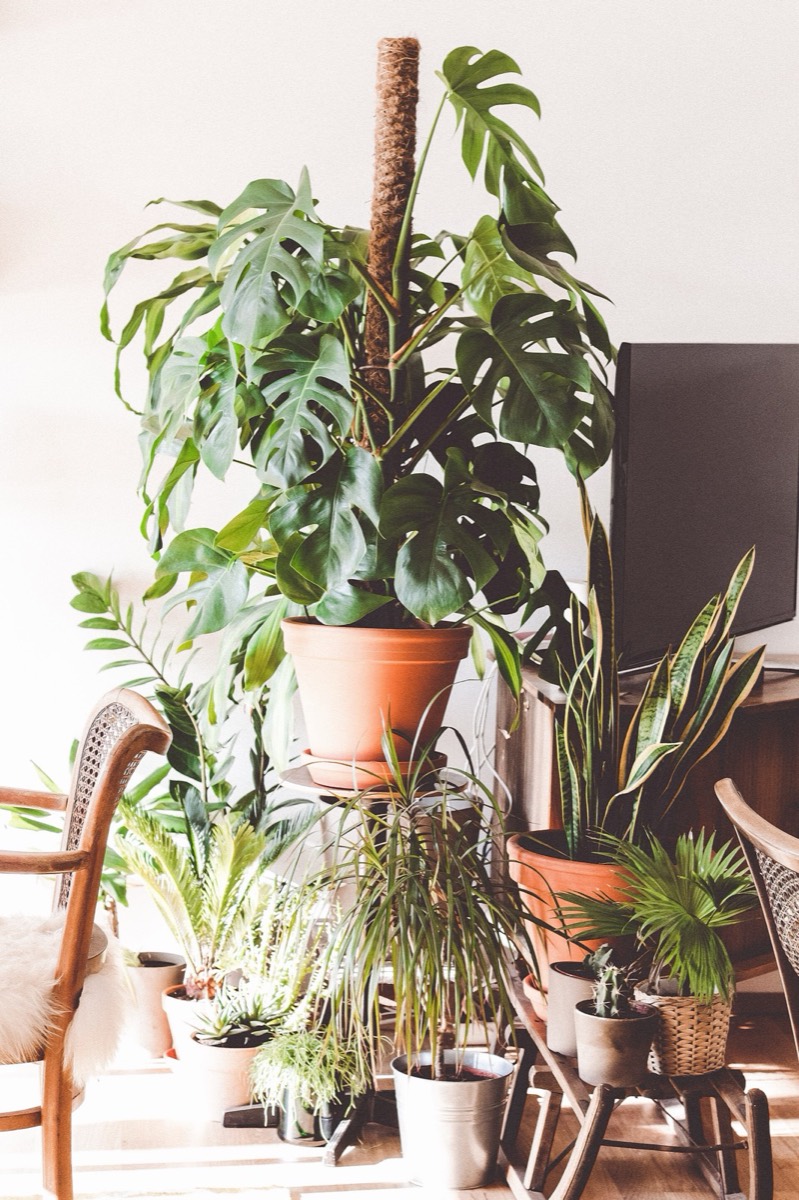

Houseplants in the bedroom are one of those ideas that sounds obviously good — greener room, cleaner air, better sleep. The reality is more modest, and worth knowing before you fill the windowsill hoping for a health upgrade. Below are the questions people actually ask, answered directly.
Do houseplants clean the air in a bedroom?
Only to a trivial degree at the numbers any normal room contains. Laboratory studies that show plants removing certain airborne chemicals use sealed chambers and very high plant densities — the kind of setup you would not want to live in. Spread over a real bedroom, the effect is far too small to make a meaningful difference to air quality.
For cleaner air, ventilation and filtration do the work: opening a window exchanges the air, and a filter-based purifier removes particles. If that is the goal, our guide to whether an air purifier helps is the more useful read. Plants are decoration you enjoy, not an appliance.
Will plants make the room too humid?
Plants release water vapour as they grow, so they do add a small amount of humidity — but far less than a single shower, or than drying laundry indoors. One or two plants will not tip a room into damp; a jungle of them, watered heavily, could nudge a small sealed room in the wrong direction.
If your bedroom is already damp, the priority is ventilation rather than more moisture — see what to aim for in humidity in the bedroom.
Are plants a problem at night?
The common worry is that plants consume oxygen and release carbon dioxide overnight. They do — but in quantities so small next to a sleeping person that it makes no practical difference to a room with any airflow at all. A closed, stuffy room is caused by the person in it, not the plants on the shelf; why bedrooms get stuffy explains that properly. A handful of plants should not change your decision.
Do plants help with allergies?
Often the opposite, for some people. Indoor plants can bring their own triggers: pollen from flowering species, and mould that grows in overwatered soil. If someone in the home is allergy-prone, easy-to-care-for foliage plants with well-drained soil are a safer bet than flowering ones, and damp soil left sitting is worth avoiding.
Plants are not a treatment for allergies, and if symptoms are significant, a health professional is the right place to start.
Which plants are safe to keep in a bedroom?
Safety matters most in homes with pets or young children, because some common houseplants are toxic if chewed or eaten. Before buying, check that a plant is non-toxic for the animals in your home, and keep anything questionable out of reach.
- Prefer low-water, tolerant plants that suit a bedroom and are less likely to leave soggy soil.
- Check pet and child safety for every plant you bring home, not just the obvious ones.
- Avoid strongly scented flowering plants in a small bedroom if anyone is sensitive to scent or pollen.
- Keep the soil draining well, so it does not stay wet and grow mould.
So do I need plants for a healthier bedroom?
No — but they are still worth having if you enjoy them. A couple of well-chosen plants make a room feel calmer and more alive, which is a real benefit to how a bedroom feels even if it is not a measurable one to the air.
The air-quality checklist stays the same with or without them: exchange the air, control moisture, keep bedding clean, and filter the air if allergies are the concern. Get those right, and the plants can simply be there for the pleasure of it.
Which plants are easiest in a bedroom?
Since the benefit is enjoyment rather than air quality, choose for tolerance and safety instead of any supposed purification power. Plants that cope with lower light and irregular watering suit bedrooms best, and foliage plants avoid the pollen that flowering species bring.
Two practical points matter more than the species: water it properly so the soil is not permanently wet, and place it where it gets reasonable light, so it does not sit damp and struggling. A plant that rots will do your room's air — and its smell — no favours at all.
Sources and research notes
This guide covers indoor plants and bedroom air, not medical advice. Claims about plants clearing indoor air are often overstated relative to real-room conditions.
Written and edited by the Resthearth Editorial. Each guide starts from a real bedroom decision, is checked against the sources listed above, and is updated when guidance changes. We are an independent editorial desk, not medical professionals — read how we research and update our guides.