
Quick answer
Wash by fill, dry by patience
- Synthetic fills
- Machine washable — use a large drum and a gentle cycle.
- Down and feather
- Washable with care, but drying is the hard part.
- Wool
- Usually gentle or specialist care; check the label first.
- Every time
- Dry fully before use — a damp duvet clumps and smells.
Check the label before anything
A duvet is the largest item on the bed and the easiest to ruin, so the label sets the rules. Look for the fill and the washing symbol, and decide from there.
| Fill | Usual guidance | Main risk |
|---|---|---|
| Synthetic / microfibre | Machine wash, gentle, low heat | Fill clumping if not dried fully |
| Down / feather | Washable with care or specialist clean | Long drying time; clumping |
| Wool | Gentle or dry clean, per label | Shrinking and felting in hot water |
| Silk | Usually specialist clean | Water damage; check the label |
If the label says dry clean only, believe it. If it says machine washable, the next question is whether your machine is actually big enough.
A too-small drum is the classic mistake
Stuffing a duvet into a home machine leaves the centre dry and unwashed, and the weight can strain the drum. If it does not move freely, take it to a launderette with a large machine.
Washing it safely
- Read the care label and follow the temperature and cycle it allows.
- Check for tears and repair or discard a split duvet before washing, or the fill escapes.
- Use a mild detergent and skip fabric softener, which coats the fill.
- Choose a gentle cycle and, where the machine allows, add an extra rinse to flush detergent from the centre.
- Realistically size the load. One duvet per wash; do not add sheets that would crowd it.
Wash the duvet far less often than its cover. Most duvets only need washing every couple of months, at a seasonal change, or after an accident — the cover is what gets the regular washing in your usual bedding rhythm.
Drying — where duvets fail
Drying is the step that decides whether the duvet survives. A damp core clumps, smells, and can go mouldy.
- Tumble on low heat with two or three dryer balls or clean tennis balls to break up clumps as it dries.
- Expect multiple cycles. Down duvets especially can take hours; the surface will feel dry well before the middle is.
- Check the core by feel. Squeeze the centre — if it is even slightly cool or damp, keep going.
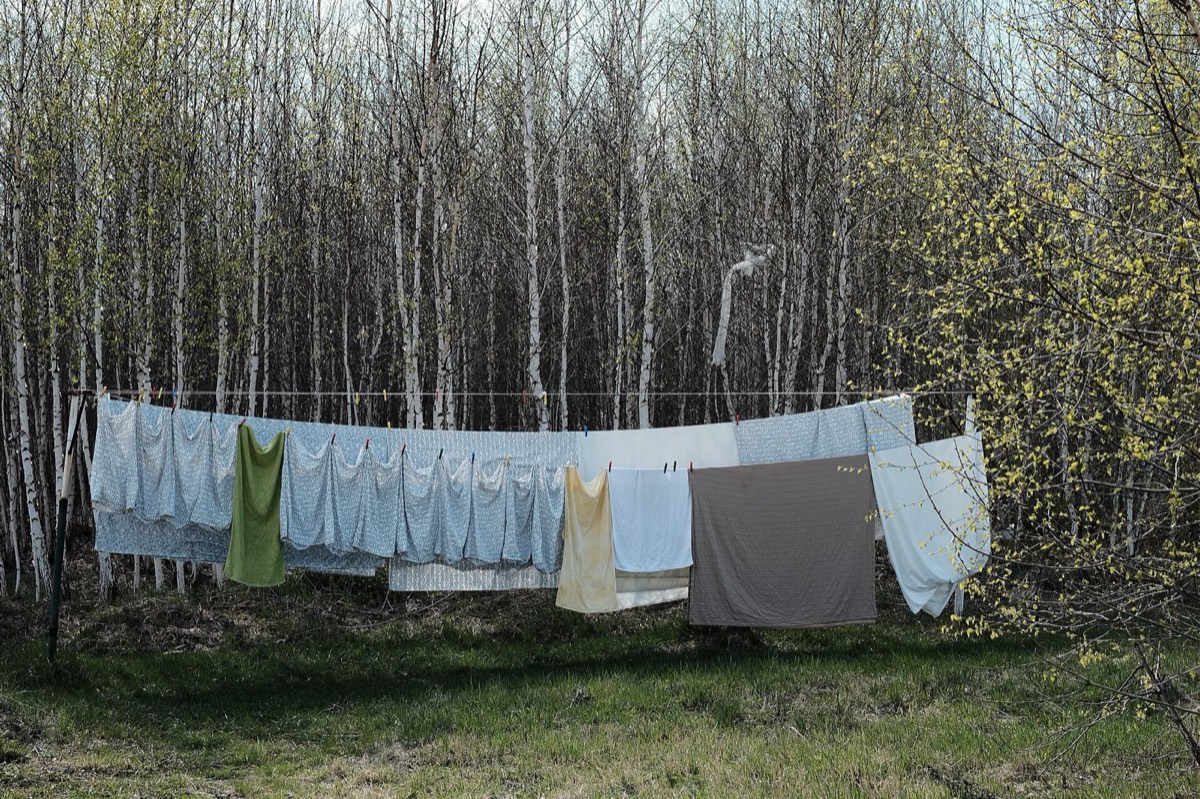
- Finish in the air. A final spell on a line or over a rack in a warm, ventilated room helps if you are unsure.
- Never use it damp. Do not make the bed until the duvet is fully dry through.
If your weather is warm and dry, line-drying is ideal; in humid conditions, a dehumidifier or a long low-heat tumble works better than leaving it to air slowly.
When not to wash it yourself
- Wool and silk duvets, which rarely tolerate a home machine.
- Very large or heavy duvets that will not move in your drum — use a launderette's oversized machine.
- Any duvet with a delicate finish or a care label that says dry clean only.
- If you cannot dry it fully, it is better to have it professionally cleaned than to wash it and leave it damp.
Whichever route you take, protecting the duvet with a cover does most of the work: a cover you can wash easily keeps the duvet itself cleaner for longer, and pairing it with a correctly sized cover also stops it sliding around inside. Choosing the right weight in the first place is covered in our guide to choosing a duvet.
Spot-cleaning between washes
A full duvet wash is a big job, so deal with small marks before they force one:
- Blot, do not rub. Press a clean cloth onto the mark with a little mild soap and cool water.
- Keep it barely damp. Use as little water as possible so the fill does not get wet through.
- Dry the spot fully, by airing or with a hairdryer on cool, so no moisture stays trapped inside.
- Treat spills immediately. A fresh mark lifts far more easily than one that has set overnight.
Spot-cleaning buys time, but it does not replace a proper wash eventually — the covering still needs cleaning on a sensible schedule.
Frequently asked questions
How often should you wash a duvet?
Every couple of months or at a seasonal change is a workable rhythm for most people, plus immediately after spills. The cover should be washed far more often.
Can you wash a down duvet at home?
Often yes, on a gentle cycle with a mild detergent, if your machine is large enough. The challenge is drying it fully — expect several low-heat cycles with dryer balls.
What if my duvet goes lumpy after washing?
It usually means it was not fully dry or the clumps were not broken up. Tumble it again on low with dryer balls before giving up on it.
Can I dry-clean a synthetic duvet?
You can, but a machine-washable synthetic usually washes well at home and dry-cleans unnecessarily. Follow the label either way.
Sources and research notes
This guide covers washing and drying bedding at home. Always follow the duvet's care label, and use a machine large enough for the load.
Written and edited by the Resthearth Editorial. Each guide starts from a real bedroom decision, is checked against the sources listed above, and is updated when guidance changes. We are an independent editorial desk, not medical professionals — read how we research and update our guides.