A sleep mask costs a fraction of blackout curtains and takes no installation, which is why it is often the first thing people try. Whether it works for you comes down to a few practical questions, answered below.
Does a sleep mask actually help?
For many people, yes — and for a simple reason. A well-fitted mask blocks light at the eyes, which is the part of the room that matters most for whether light disturbs you. If early light or a bright street is waking you, a mask that seals around the eyes can make a real difference.
It is a comfort product, though, not a treatment. If you have persistent sleep problems, the mask is not the answer; that is a conversation for a health professional.
Sleep mask or fix the room?
These are not competing options, and the honest answer depends on what is waking you. A mask covers the single source closest to your eyes; fixing the room addresses light hitting you from anywhere, plus heat, noise and glare.
So the useful split is: if you have a specific, stubborn light source — a partner reading, a bright street, travel — a mask may be all you need. If the whole room is too bright at dawn, the room covering does more, and a mask tops it up. Our guide to darkening a room covers the room side.
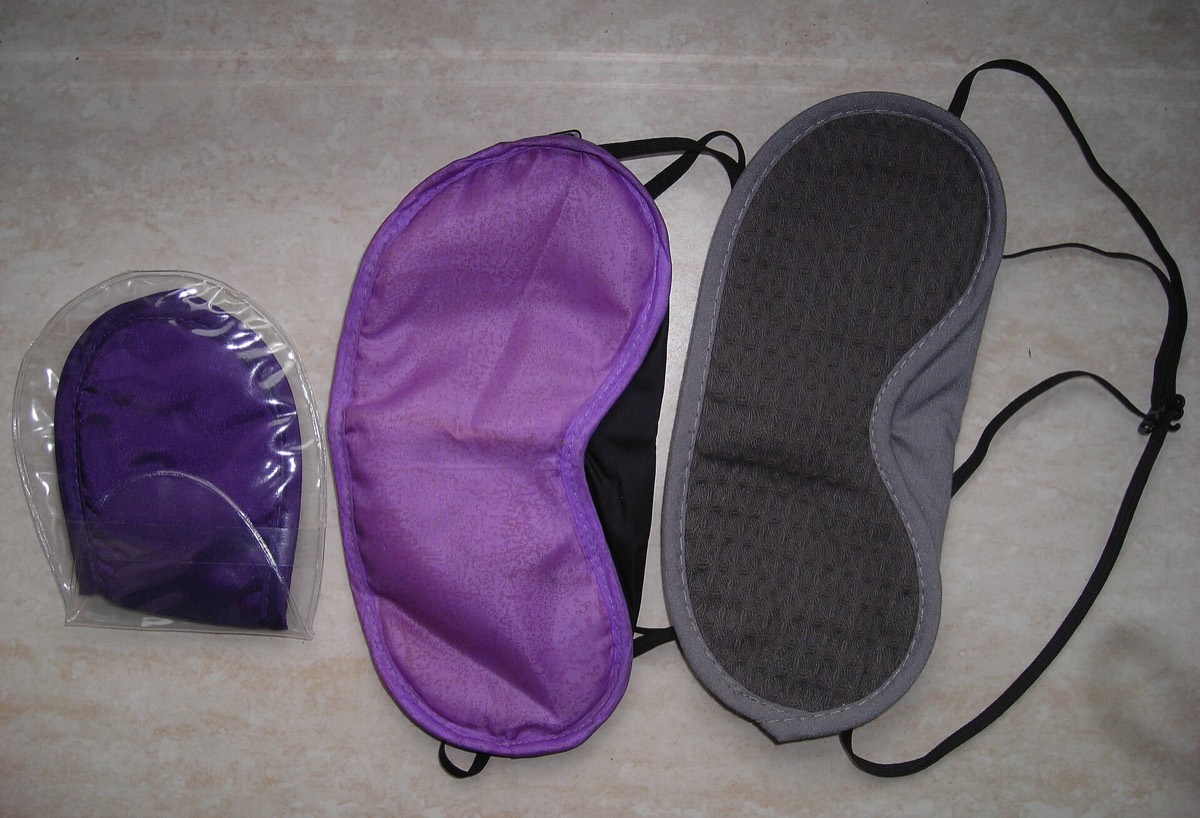
What makes a good sleep mask?
- A complete seal around the eyes. Light leaks in at the nose bridge and cheeks on cheap masks; contouring matters more than fabric.
- A breathable, soft material. Comfort decides whether you actually keep it on.
- Adjustability. A strap you can size to your head stays put without pressing.
- Low profile, so it does not press uncomfortably when you sleep on your side.
- A washable fabric, since it sits on your face every night.
Will it stay on all night?
Often the deciding factor, and the main reason people abandon masks. A loose elastic strap slips off; a tight one leaves a mark. Contoured masks that sit away from the eyes and a correctly adjusted strap both help, as does choosing a mask designed for side sleeping if you move a lot.
If you have tried a few and still find masks uncomfortable or they end up on the floor, that is a fair signal to invest in the room instead — better covering where the light actually enters.
Is a mask best for travel?
This is where a sleep mask earns its place even if you have a dark bedroom at home. Hotel rooms, planes, trains and guest beds are all unpredictable, and a mask that lives in your bag gives you portable darkness with no setup. It pairs naturally with the on-the-go version of a bedroom routine.
Can a mask cause problems?
- It only covers your eyes. Light elsewhere in the room still reaches you if the mask shifts, which is why it is rarely quite as effective as a genuinely dark room.
- It does not help the morning. If you use one for sleep, it works against a gradual bright wake-up until you take it off.
- Comfort and hygiene: a mask needs washing like any fabric against your skin, and a poorly fitting one can disturb sleep rather than help it.
- It is not a substitute for a dark room if your aim is to reduce overall light, as covered in how bright a bedroom should be.
So should you get one?
If you want cheap, portable darkness for travel, shift work or a single stubborn light source, a mask is an easy yes. If your whole room is too bright, or you have already found masks uncomfortable, spend the money on the room instead. Many people end up using both — a dark room as the default and a mask for everywhere that is not home.
How do you wash a sleep mask?
A mask sits against your face every night, so it needs the same hygiene as a pillowcase. Most fabric masks are hand-washable or fine in a mesh bag on a gentle cycle — check the label first, because contoured foam inserts and elastic straps distort easily.
Wash it weekly or so, rinse thoroughly, and dry it flat or hanging rather than in a hot dryer that can warp the shape. Keeping a second mask means one can dry while the other is in use, just like having spare pillowcases.
Sources and research notes
This guide covers light and comfort in the bedroom, not medical advice. Persistent sleep problems should be discussed with a health professional.
Written and edited by the Resthearth Editorial. Each guide starts from a real bedroom decision, is checked against the sources listed above, and is updated when guidance changes. We are an independent editorial desk, not medical professionals — read how we research and update our guides.